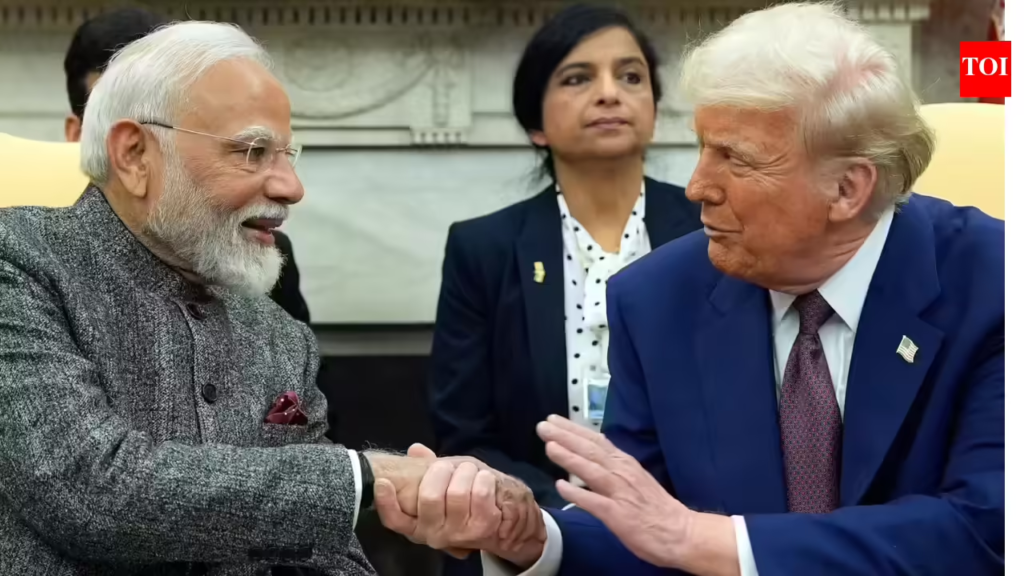
Trump and Modi React as US Eases Tariff Pressure on India

Understanding Why Trump and Modi React as US Eases Tariff Pressure on India Matters
The development captured by the phrase Trump and Modi React as US Eases Tariff Pressure on India represents a significant moment in contemporary international trade relations. It signals a shift in economic diplomacy between two of the world’s largest democracies and reflects evolving priorities in global commerce. When trade tensions ease between major economies, the consequences extend beyond bilateral relations, influencing investor confidence, regional alliances, and global supply chains. The reactions of both leaders provide insight into how trade policy is used as a strategic and political tool in an increasingly interconnected world.
Global Trade Context Behind Trump and Modi React as US Eases Tariff Pressure on India
To understand why Trump and Modi React as US Eases Tariff Pressure on India has drawn global attention, it is essential to consider the broader trade environment. In recent years, international trade has been shaped by protectionist tendencies, supply chain disruptions, and geopolitical rivalries. Tariffs have often been used not only as economic instruments but also as leverage in diplomatic negotiations. Against this backdrop, any easing of tariff pressure signals recalibration rather than retreat, making the responses of national leaders especially significant.
Trump and Modi React as US Eases Tariff Pressure on India and the History of US–India Trade Relations
The phrase Trump and Modi React as US Eases Tariff Pressure on India cannot be fully understood without examining the long-standing trade relationship between the United States and India. Over the decades, bilateral trade has expanded steadily, yet it has also faced recurring disagreements over market access, tariffs, and regulatory standards. While cooperation has deepened in areas such as defense and technology, trade policy has often remained a sensitive domain, making tariff-related decisions particularly consequential. Leadership style plays a critical role in how trade decisions are communicated, and Trump and Modi React as US Eases Tariff Pressure on India highlights contrasting yet complementary approaches. Donald Trump’s trade rhetoric traditionally emphasized negotiation strength, reciprocity, and national interest, often delivered in direct and assertive language. Narendra Modi’s responses, in contrast, typically emphasize diplomacy, long-term growth, and global partnership. Together, these approaches shape how the same policy decision is framed for different audiences. When Trump and Modi React as US Eases Tariff Pressure on India, their statements are designed not only for international observers but also for domestic constituencies. In the United States, easing tariff pressure can be presented as a strategic decision that protects American interests while strengthening alliances. In India, the same development may be portrayed as a diplomatic success that reflects growing global influence. These domestic narratives help leaders maintain political legitimacy while navigating complex trade-offs.
Economic Implications Highlighted as Trump and Modi React as the US Eases Tariff Pressure on India
The economic consequences implied when Trump and Modi React as US Eases Tariff Pressure on India are multifaceted. For Indian exporters, reduced tariff barriers can improve competitiveness in the US market, particularly in sectors such as manufacturing, pharmaceuticals, and specialized services. For American businesses, improved trade relations can lead to more stable supply chains and expanded access to a rapidly growing consumer base. Thus, tariff easing catalyzes broader economic engagement.
Market Confidence and Investment Signals in Trump and Modi React as the US Eases Tariff Pressure on India
Another important dimension of Trump and Modi React as US Eases Tariff Pressure on India is the signal it sends to global markets. Trade predictability is a key factor in investment decisions, and any reduction in trade friction can enhance confidence among investors. While tariff changes alone do not guarantee long-term stability, they often indicate a willingness to engage constructively, which markets tend to view positively.
Small and Medium Enterprises and Trump and Modi React as US Eases Tariff Pressure on India
For small and medium enterprises, the development captured by Trump and Modi React as US Eases Tariff Pressure on India can be particularly meaningful. These businesses are often the most vulnerable to trade barriers due to limited resources and thin profit margins. Reduced tariffs can open new opportunities for cross-border trade, enabling smaller firms to participate more actively in global markets.
Strategic and Geopolitical Dimensions of Trump and Modi React as US Eases Tariff Pressure on India
Beyond economics, Trump and Modi React as the US Eases Tariff Pressure on India, which carries strategic implications. India and the United States share common interests in regional stability, technological cooperation, and supply chain resilience. Strengthening economic ties through tariff adjustments can reinforce broader strategic alignment, particularly amid shifting global power dynamics and regional competition. The Indo-Pacific region has become central to global strategic planning, and aligns with efforts to strengthen partnerships in this region. Economic cooperation complements defense and diplomatic initiatives, helping to build trust and interdependence. Trade decisions, therefore, function as part of a larger strategic framework rather than isolated policy moves.
Diplomatic Symbolism in Trump and Modi React as US Eases Tariff Pressure on India
Diplomatic symbolism plays a powerful role in international relations and illustrates how symbolic gestures can shape perceptions. Even modest policy adjustments can be interpreted as signs of goodwill, especially when accompanied by positive rhetoric. Such symbolism can help reset narratives and create momentum for further dialogue. Media coverage significantly influences how the public perceives it. Headlines, commentary, and expert analysis frame the development as either a breakthrough or a tactical pause. These interpretations affect public opinion and, indirectly, future policy decisions, demonstrating the importance of communication in trade diplomacy. While Trump and Modi React as the US Eases Tariff Pressure on India, suggesting progress, it does not eliminate longstanding challenges. Disagreements over agriculture, digital trade, and regulatory standards remain unresolved. Tariff easing may create space for negotiation, but sustained engagement and compromise are necessary to address deeper structural issues. Looking forward, the moment captured by me may serve as a foundation for renewed dialogue. Future trade discussions will likely focus on balancing domestic priorities with the benefits of openness. The ability of both nations to manage disagreements constructively will determine whether this development marks a turning point or a temporary adjustment.
Interpreting the Significance of Trump and Modi React as US Eases Tariff Pressure on India
In conclusion, Trump and Modi React as US Eases Tariff Pressure on India represents more than a simple trade policy adjustment. It reflects the intersection of economics, politics, and diplomacy in a rapidly changing global environment. The reactions of both leaders reveal how trade decisions are framed to serve domestic and international objectives simultaneously. As global trade continues to evolve, moments like this highlight the importance of dialogue, flexibility, and strategic cooperation in shaping the future of international economic relations.