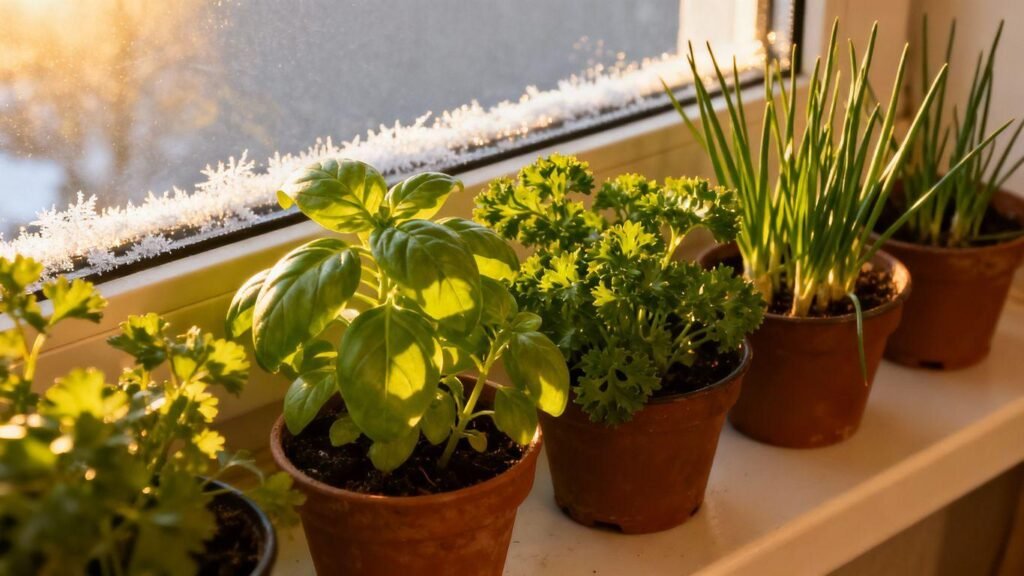

Starting an indoor herb garden in winter is one of the easiest ways to enjoy fresh greenery and homegrown ingredients when outdoor temperatures drop. Even if you live in a small apartment, have limited gardening experience, or don’t own a backyard, you can grow useful culinary herbs in containers near a sunny window or under a grow light.
Winter gardening comes with a few challenges. Shorter days mean less natural sunlight, indoor heating can dry the air, and cold windows may expose plants to uncomfortable temperature changes. Fortunately, choosing suitable herbs and providing the right conditions can make a noticeable difference.
Whether you live in New York, Chicago, Seattle, or another part of the United States, this beginner-friendly guide explains how to grow herbs indoors during winter in seven practical steps.
You’ll learn which herbs to choose, how to set up your growing space, when to water, and how to harvest fresh leaves for everyday cooking.
Why Start an Indoor Herb Garden in Winter?
An indoor herb garden can be a practical addition to your kitchen or living space.
Instead of relying entirely on packaged herbs from the grocery store, you can harvest small amounts of fresh basil, parsley, chives, or mint when your plants are growing well.
There are several advantages to growing herbs indoors:
- Access to fresh ingredients for soups, salads, sauces, and other meals.
- A simple gardening activity during the colder months.
- An opportunity to learn plant care without needing an outdoor garden.
- More control over watering, soil, and lighting conditions.
- A compact growing setup suitable for apartments and small homes.
However, indoor herbs usually grow more slowly during winter, particularly when they receive limited sunlight.
Realistic expectations are important. A small windowsill garden may provide occasional harvests rather than enough herbs for every meal.
Best Herbs for an Indoor Herb Garden in Winter
Choosing suitable plants is the first step toward successful winter gardening.
Some culinary herbs tolerate indoor conditions better than others.
| Herb | Light Needs | Beginner Difficulty | Common Uses |
|---|---|---|---|
| Parsley | Moderate to bright | Easy | Soups, salads, sauces |
| Mint | Moderate to bright | Easy | Tea, drinks, desserts |
| Chives | Moderate to bright | Easy | Eggs, potatoes, soups |
| Basil | Bright light | Moderate | Pasta, pesto, salads |
| Thyme | Bright light | Moderate | Roasted vegetables, soups |
| Oregano | Bright light | Moderate | Pizza, sauces, seasoning |
| Rosemary | Strong light | Moderate to challenging | Potatoes, bread, poultry |
For your first indoor garden, parsley, chives, and mint are sensible choices.
Basil is also popular but needs sufficient light and protection from cold temperatures.
Rosemary and thyme can grow indoors successfully, although they generally prefer brighter conditions and well-drained soil.
According to Iowa State University Extension, several common culinary herbs can be grown indoors when their growing requirements are met.
Step 1: Choose the Right Location for Your Indoor Herb Garden
Location has a major influence on plant growth.
Most culinary herbs perform best in a bright area with access to direct sunlight.
A south-facing window is often a suitable choice in the Northern Hemisphere because it can receive substantial sunlight during winter.
West-facing windows may also work, depending on nearby buildings, trees, and other obstructions.
What If Your Home Doesn’t Get Enough Sunlight?
Not every house or apartment receives several hours of direct sunlight.
If your plants are becoming tall, thin, or pale, they may need stronger lighting.
Consider using a supplemental LED grow light rather than depending on a dim windowsill.
A simple shelf or countertop growing area can work well for beginners.
Avoid Cold Drafts and Heating Vents
Indoor temperature changes can stress plants.
Keep your containers away from frequently opened exterior doors, cold drafts, and hot air blowing directly from heating vents.
Basil is particularly sensitive to cold conditions, so avoid placing it against an icy window.
Step 2: Select Containers With Proper Drainage
Choosing the right containers is essential when setting up an indoor herb garden in winter.
Herbs do not grow well when their roots remain in constantly waterlogged soil.
Select containers with drainage holes that allow excess water to escape.
You can use:
- Terracotta pots
- Plastic nursery containers
- Ceramic pots with drainage holes
- Small window boxes with suitable drainage
- Individual herb planters
Terracotta pots allow moisture to evaporate through their porous sides, which can be useful for herbs that prefer their growing medium to dry somewhat between waterings.
Plastic containers hold moisture longer and may require less frequent watering.
Should You Plant Different Herbs Together?
Growing every herb in one large container may look attractive, but different plants have different moisture requirements.
For beginners, separate pots are often easier to manage.
For example, mint generally prefers more consistent moisture than rosemary or thyme.
Separate containers allow you to adjust watering for each plant.
Step 3: Use High-Quality Potting Mix
Ordinary outdoor garden soil is not always suitable for indoor containers.
It may become compacted, drain poorly, or introduce unwanted insects.
Instead, choose a lightweight potting mix intended for container plants.
A suitable growing medium should hold enough moisture for roots while allowing excess water to drain.
For herbs that prefer drier conditions, a mix containing perlite can improve drainage.
How to Plant Your Herbs
Follow these simple steps:
- Fill your container partly with potting mix.
- Remove the herb gently from its nursery pot.
- Loosen tightly circling roots if necessary.
- Position the plant at approximately its original planting depth.
- Add potting mix around the roots.
- Water gently until excess moisture drains.
- Empty the saucer after drainage.
Avoid burying the stems deeper than they were growing unless the plant’s specific care instructions recommend it.
Step 4: Provide Enough Light During Winter
Light is one of the biggest challenges in winter indoor gardening.
Short days, cloudy weather, and window obstructions can leave herbs without enough energy for healthy growth.
If you have a sunny location, observe how many hours of direct sunlight the plants actually receive.
If natural light is insufficient, a full-spectrum LED grow light can provide supplemental illumination.
How Long Should Indoor Grow Lights Stay On?
A common starting recommendation is approximately 12–16 hours of supplemental lighting per day, depending on the plant, light intensity, and natural sunlight available.
Use a timer to maintain a consistent schedule and provide a dark period overnight.
The correct distance between the lamp and the leaves depends on the manufacturer’s instructions and the light’s intensity.
Don’t assume that placing a powerful light extremely close to the foliage will improve growth.
Too much light or heat can also damage plants.
Signs Your Herbs Need More Light
Watch for these symptoms:
- Thin or stretched stems
- Pale leaves
- Slow or weak new growth
- Plants leaning heavily toward the window
- Reduced leaf production
Move the herbs to a brighter location or adjust your grow-light setup when necessary.
Step 5: Water Your Indoor Herbs Correctly
Overwatering is one of the most common mistakes beginners make.
During winter, herbs may grow more slowly and use less water than they would in a warm, sunny outdoor garden.
This means watering on a fixed daily schedule can cause problems.
Instead, check the potting mix before adding water.
How to Know When Your Herbs Need Water
Insert your finger about an inch into the growing medium.
If the upper layer feels dry, check whether that herb is ready for watering.
Mint and parsley may prefer more consistent moisture, while rosemary, thyme, and oregano generally benefit from drying somewhat between waterings.
When watering, apply water slowly until some drains through the bottom, then discard standing water from the saucer.
Signs of Overwatering
Overwatered plants may develop:
- Yellowing leaves
- Soft or weak stems
- Persistent wet soil
- Unpleasant odors from the potting mix
- Root problems or wilting despite damp soil
Yellow leaves can have several causes, so inspect lighting, temperature, drainage, and soil moisture before deciding what to change.
Step 6: Maintain the Right Temperature and Humidity
An indoor herb garden in winter needs reasonably stable indoor conditions.
Many culinary herbs do well in comfortable household temperatures, although individual species have different preferences.
Penn State Extension recommends generally warm indoor daytime conditions while noting that basil can be harmed by temperatures below 50°F.
During winter, indoor heating systems can create unusually dry air.
You may notice leaves developing dry edges, particularly if plants are placed close to heating vents.
Ways to Improve Growing Conditions
Try these simple adjustments:
- Move herbs away from direct blasts of heated air.
- Avoid cold drafts.
- Group plants together without overcrowding them.
- Use a pebble tray or room humidifier if appropriate.
- Maintain gentle air circulation around the foliage.
- Check for pests during routine plant care.
Avoid leaving foliage constantly wet or placing plants in an area with stagnant, excessively humid air.
Good air circulation helps reduce conditions favorable to certain fungal problems.
Step 7: Harvest Your Herbs Without Damaging the Plants
Harvesting is one of the most rewarding parts of growing fresh herbs indoors.
However, removing too many leaves from a small winter plant can slow its recovery.
Wait until each herb has enough healthy growth before harvesting.
Use clean scissors or pruning shears, and take modest amounts at a time.
How to Harvest Basil
Cut a healthy stem just above a pair of leaves or a branching point.
This can encourage branching and fuller growth.
How to Harvest Chives
Snip a small amount of foliage, leaving enough growth for the plant to recover.
How to Harvest Parsley
Take mature outer stems while preserving the younger growth near the center.
How to Harvest Mint
Trim healthy stem tips periodically to encourage a bushier plant.
Because winter growth may be slower, avoid heavy harvesting until the plant has recovered.
Indoor Herb Garden in Winter: Weekly Care Checklist
Consistency matters more than complicated gardening techniques.
Use this simple checklist to keep your indoor herbs healthy.
| Task | Suggested Frequency |
|---|---|
| Check soil moisture | Every 2–3 days or as needed |
| Observe leaf condition | Several times weekly |
| Check grow-light timer | Weekly |
| Inspect for insects | Weekly |
| Rotate pots near windows | Weekly |
| Harvest mature growth | As available |
| Check drainage trays | After watering |
| Assess fertilizer needs | Occasionally |
These are reminders to check your plants, not rigid schedules. Actual watering frequency depends on the herb, pot size, growing medium, temperature, and light.
Common Indoor Herb Gardening Mistakes to Avoid
Even a carefully planned herb garden can struggle if the growing conditions are unsuitable.
1. Growing Herbs in a Dark Kitchen
Not every kitchen windowsill receives enough sunlight.
If your kitchen is dark, choose a brighter room or use a grow light.
2. Watering Every Day
Daily watering is not necessary for most indoor herb plants.
Check soil moisture rather than following a fixed schedule.
3. Using Pots Without Drainage Holes
Decorative containers without drainage can trap excess water.
Use an inner nursery pot with drainage if you prefer a decorative outer planter.
4. Growing Too Many Herbs at Once
Starting with ten different herbs can make it difficult to recognize each plant’s requirements.
Begin with two or three varieties and expand after learning how they respond to your home.
5. Overfertilizing During Winter
Herbs growing slowly under limited winter light usually require little fertilizer.
Excess fertilizer may cause salt accumulation or other plant problems.
Only feed when appropriate for the plant and its growing conditions.
6. Ignoring Indoor Pests
Check the undersides of leaves and stems for signs of aphids, spider mites, or other pests.
Isolate an affected plant while identifying the problem and choosing an appropriate treatment.
7. Expecting Outdoor-Sized Harvests
A small indoor pot may not produce the same amount of foliage as a mature outdoor plant.
Treat winter herb gardening as a way to supplement cooking with fresh ingredients rather than replacing grocery shopping entirely.
Can You Grow Herbs Indoors Without a Grow Light?
Yes, provided you have a sufficiently sunny location and choose herbs suited to the available light.
A bright south-facing window may support some herbs during winter.
However, natural winter light differs significantly across the United States.
Homes in northern states often experience shorter winter days and may need supplemental lighting more frequently than homes in sunnier southern locations.
If your herbs repeatedly become thin, weak, or pale, a grow light may improve growing conditions.
For additional guidance, see Iowa State University’s advice on providing supplemental light for indoor herbs.
How Much Does a Small Indoor Herb Garden Cost?
The cost varies depending on what you already own.
A simple windowsill garden requires fewer supplies than an indoor growing system with artificial lighting.
| Item | Budget Approach |
|---|---|
| Herb plants or seeds | Start with two or three varieties |
| Containers | Reuse clean pots with drainage |
| Potting mix | Buy one small bag |
| Drainage saucers | Reuse suitable household trays |
| Grow light | Optional if sunlight is sufficient |
| Timer | Useful for supplemental lighting |
| Fertilizer | Purchase only when needed |
You do not need an expensive hydroponic system to grow a few culinary herbs.
Start with a manageable setup and make improvements based on how your plants perform.
Frequently Asked Questions
What are the easiest herbs to grow indoors in winter?
Parsley, mint, and chives are good beginner options. Basil, thyme, and oregano can also succeed when they receive suitable light, drainage, and temperature conditions.
Can I grow an indoor herb garden in winter without sunlight?
Herbs need adequate light to grow. If natural sunlight is insufficient, an appropriate LED grow light can provide the light needed for healthy growth.
How often should I water indoor herbs during winter?
There is no universal schedule. Check the growing medium regularly and water according to the needs of each herb rather than automatically watering every day.
What is the best window for growing herbs indoors?
In the Northern Hemisphere, a sunny south-facing window is often a strong choice. West-facing windows may also work when they receive enough direct sunlight.
Can basil survive indoors during winter?
Yes, but basil needs warm temperatures and plenty of bright light. Protect it from cold windows and drafts, and consider supplemental lighting during dark winter months.
Why are my indoor herbs turning yellow?
Possible causes include excessive watering, poor drainage, insufficient light, nutrient problems, or pest damage. Check the plant’s environment before changing its care routine.
Is it better to grow herbs from seeds or starter plants?
Starter plants are often easier for beginners because they already have established foliage. Seeds may cost less and provide more variety, but germination and early growth require additional care.
Final Thoughts
Creating an indoor herb garden in winter is a simple and rewarding way to continue gardening when outdoor growing conditions are unfavorable.
You don’t need a large home, expensive equipment, or years of gardening experience to begin.
Start with a few suitable herbs, choose containers with drainage, provide enough light, and learn how each plant responds to watering.
With consistent care and realistic expectations, your indoor herb garden can bring fresh ingredients, greenery, and a little gardening enjoyment into your home throughout the colder months.