
How can you prevent heart attacks while keeping high blood pressure under control? One of the most useful steps is to build a sustainable routine of physical activity alongside appropriate medical care. Regular exercise can improve heart health, help manage blood pressure, and reduce cardiovascular risk. It cannot guarantee that a heart attack will never happen, and it does not replace prescribed treatment.
Quick answer: Most adults should gradually work toward at least 150 minutes of moderate-intensity aerobic activity per week, such as brisk walking, plus strength training on two days. Eat a heart-healthy diet, avoid tobacco, monitor blood pressure and follow your clinician’s advice. Anyone with known heart disease or uncontrolled symptoms should ask a clinician how to exercise safely.
Medical disclaimer: This article offers general health education, not a diagnosis, personalised exercise prescription or emergency treatment advice. If you may be having a heart attack, call your local emergency number immediately.
Why high blood pressure increases heart attack risk
Blood pressure describes the force of blood pushing against artery walls. When pressure remains too high over time, it puts strain on the heart and blood vessels. Hypertension is an important risk factor for heart attack, stroke, kidney disease and other serious problems. A heart attack usually happens when blood flow to part of the heart muscle is blocked.
Many people with high blood pressure feel well. That is why routine measurement matters: symptoms alone cannot tell you whether your blood pressure is controlled. The American Heart Association describes blood pressure below 120/80 mm Hg as normal for adults, but individual treatment goals depend on a person’s medical circumstances.
Trying to prevent heart attacks means managing several risks together. Along with high blood pressure, smoking, diabetes, high cholesterol, excess weight, family history and physical inactivity can all influence cardiovascular health.
Why regular exercise matters for heart health
1. Exercise can help lower blood pressure
Physical activity helps the cardiovascular system work more efficiently. Over time, a suitable exercise routine can help lower blood pressure and improve fitness. The size of the benefit varies from person to person, and people who need medication should continue taking it as prescribed.
2. Movement supports healthier weight and blood sugar
Activity uses energy and can help with weight management when paired with nutritious food. It can also support blood sugar regulation and metabolic health. These effects matter because diabetes and obesity are associated with greater cardiovascular risk.
3. Exercise builds endurance and reduces sitting time
Brisk walking, cycling and swimming can improve endurance. Short movement breaks during a sedentary day are also worthwhile. An active lifestyle can support energy, sleep and stress management, even before a person reaches a full weekly exercise goal.
4. Strength training helps overall fitness
Strength training works muscles that make daily life easier. For background on bones, joints and muscles, see our orthopedics explainer. The American Heart Association recommends muscle-strengthening activity at least two days each week. Adults with cardiovascular conditions should discuss appropriate resistance, technique and intensity with their healthcare team.
How much exercise should adults do each week?
The American Heart Association’s physical activity recommendations call for at least 150 minutes of moderate aerobic activity or 75 minutes of vigorous activity a week, or an equivalent combination. Add muscle-strengthening exercise on at least two days and increase effort gradually. The World Health Organization also recommends regular activity and says doing some movement is better than doing none.
| Activity | Practical example | Important note |
|---|---|---|
| Moderate aerobic exercise | Brisk walking, comfortable cycling, dancing | Usually possible to talk, but not sing easily |
| Strength training | Resistance bands, body-weight exercises, suitable weights | At least two days, with appropriate technique |
| Light everyday movement | Short walks, stairs when safe, standing breaks | Helps reduce long sitting periods |
| Recovery | Rest, hydration, adequate sleep | Important when increasing activity |
People who have been inactive should start with manageable sessions rather than suddenly attempting hard workouts. Moderate exercise is not a competition. Your healthcare professional may suggest a different plan if you have symptoms, pregnancy-related concerns, significant hypertension or other conditions.
A simple seven-day walking plan for beginners
This is an example for adults who feel well and have no medical restrictions. It is not intended for someone experiencing chest pain, severe shortness of breath or an acute illness.
- Monday: Walk comfortably for 10–15 minutes.
- Tuesday: Take two short walks and break up long sitting periods.
- Wednesday: Walk for 15 minutes at a comfortable, steady pace.
- Thursday: Rest or choose gentle movement as appropriate.
- Friday: Walk for 15–20 minutes if previous days felt comfortable.
- Saturday: Enjoy an easy walk with a friend or family member.
- Sunday: Review how you felt and plan gradual progress.
Build up over subsequent weeks toward recommended activity levels rather than pushing through discomfort. If you have diagnosed high blood pressure, ask your clinician what intensity is appropriate and whether exercise restrictions apply.
Heart-healthy habits beyond exercise
Choose meals that support blood pressure control
A pattern built around vegetables, fruit, beans, whole grains and suitable protein sources can help cardiovascular health. Reduce excess sodium, particularly from processed foods and salty snacks. The CDC’s high blood pressure prevention guidance emphasises a lower-sodium diet, healthy weight, physical activity, sufficient sleep and avoidance of tobacco.
Avoid tobacco and take sleep seriously
Smoking damages cardiovascular health, and avoiding tobacco is one of the most important ways to reduce risk. Regular, adequate sleep and attention to stress also contribute to overall wellbeing. If stress is persistent, discuss it with a qualified professional instead of relying on exercise alone.
Continue prescribed medication and follow-up
Exercise is valuable, but it is not a substitute for antihypertensive medicine, cholesterol treatment or diabetes care when prescribed. Do not stop or change doses because a home blood pressure reading looks better after a walk. Follow your care plan and attend recommended check-ups.
How to check your blood pressure at home
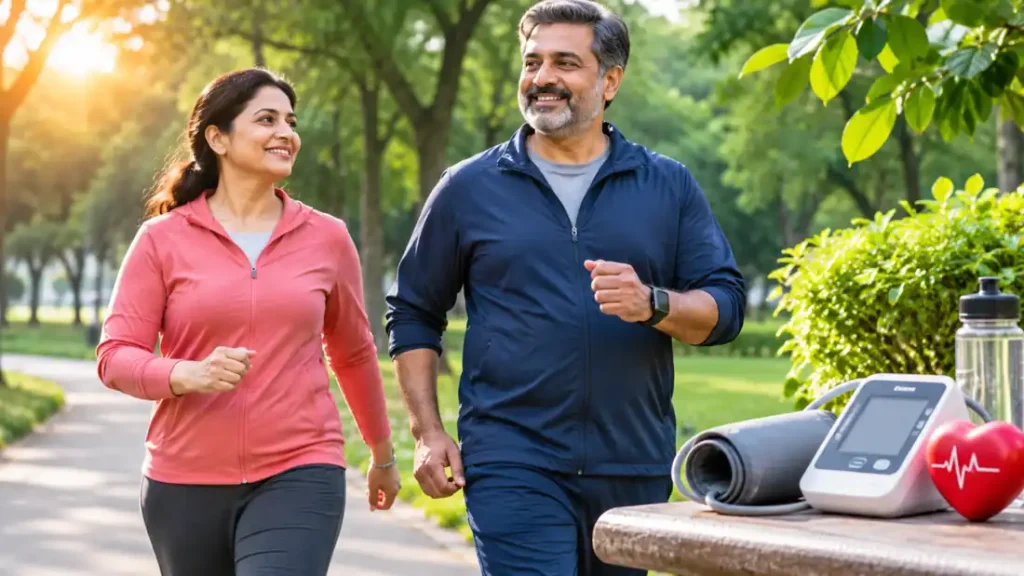
Home monitoring can help you see patterns rather than relying on a single reading. Use a validated upper-arm monitor when available, follow the device instructions, sit quietly, support your arm and record the date, time and measurements. Discuss your readings with your medical team.
According to the American Heart Association’s home-monitoring advice, a single higher-than-expected result should usually be checked again. When a measurement is higher than 180 systolic and/or 120 diastolic mm Hg, wait at least one minute and repeat it. If it remains severely elevated, contact a healthcare professional promptly; if you also have chest pain, breathlessness, weakness, vision changes or other concerning symptoms, call emergency services immediately.
Warning signs: when exercise is unsafe
Stop activity immediately if you develop chest pressure, unusual shortness of breath, faintness, severe dizziness or a concerning irregular heartbeat. Do not attempt to “walk off” possible heart attack symptoms. The American Heart Association’s heart attack warning guide lists chest discomfort, pain spreading to the arms, back, jaw or stomach, breathlessness, cold sweats, nausea and lightheadedness among possible symptoms.
If a heart attack is suspected, call the emergency number where you are and seek urgent medical help. In the United States, this is 911; in Bangladesh, 999; in India, 112. Do not delay care to check blood pressure, finish a workout or search for home remedies. Symptoms can differ among individuals, including women, older adults and people with diabetes.
Can exercise prevent heart attacks completely?
No single habit can guarantee complete protection. Regular movement is one part of an overall strategy that includes medical follow-up, blood pressure control, healthy eating, tobacco avoidance and management of cholesterol or diabetes. Genetics and other factors also affect individual risk.
The best approach to prevent heart attacks is realistic: start with a manageable activity, follow medical advice, and make heart-healthy habits part of ordinary life instead of relying on intense short-term workouts.
Frequently asked questions
Is walking enough to help control high blood pressure?
Regular brisk walking can contribute to blood pressure management and cardiovascular fitness. People may still need medication, dietary changes and additional forms of activity depending on their medical needs.
Can I exercise if my blood pressure is high?
Many people with treated hypertension can exercise safely, but the type and intensity should match their condition. Seek medical advice if your blood pressure is poorly controlled or you have chest symptoms, dizziness or existing heart disease.
Is 30 minutes of walking every day necessary?
A common option is 30 minutes of moderate activity on five days, giving 150 minutes per week. Shorter sessions can also contribute. What matters is an appropriate, sustainable weekly total.
Should I stop blood pressure medicine after starting exercise?
No. Never stop or change prescribed medication without guidance from your healthcare professional.
What is the biggest warning sign of a heart attack?
Chest pressure or discomfort is common, but symptoms vary. Shortness of breath, pain elsewhere in the upper body, nausea, cold sweat or sudden lightheadedness may also occur. Seek emergency care if a heart attack is suspected.
Final takeaway
Regular exercise is important because it can improve fitness, support healthier blood pressure and lower cardiovascular risk. Start gradually, combine movement with other proven healthy habits, and work with your healthcare team on individual risks. There is no guaranteed way to prevent heart attacks, but consistent and medically appropriate prevention can make a meaningful difference.