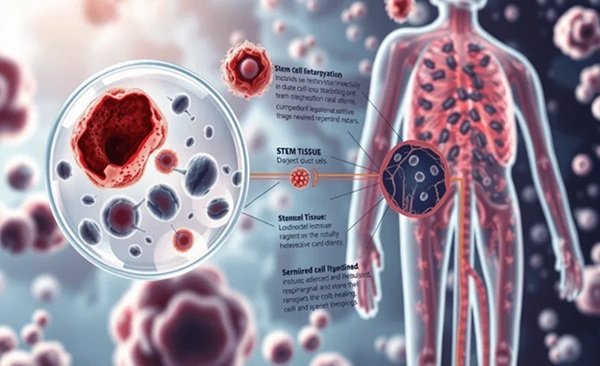

Stem cells are cells with two defining abilities: they can make more stem cells through self-renewal, and they can develop into more specialised cells under the right conditions. Scientists study them to understand development, disease and the potential for future regenerative treatments.
What are stem cells?
Unlike a mature skin, muscle or nerve cell, a stem cell is not yet committed to one specialised job. Depending on its type and environment, it can keep dividing or begin the process of differentiation into other cell types.
Main types of stem cells
- Embryonic stem cells: pluripotent cells that can develop into many cell types.
- Adult or somatic stem cells: cells found in tissues that usually produce a more limited range of related cell types.
- Induced pluripotent stem cells (iPSCs): adult cells reprogrammed in a laboratory so researchers can study disease and test potential treatments.
Why stem cells matter in research
Stem cells help researchers model diseases, study how tissues develop and test medicines. They may also contribute to regenerative medicine, but translating laboratory findings into safe, proven treatments takes careful clinical research.
What treatments are established?
Established uses and regulatory approvals apply to specific products, conditions and patient groups. They should not be taken as approval of every treatment marketed as a stem-cell therapy.
For example, on 18 December 2024 the US FDA approved Ryoncil (remestemcel-L-rknd), a donor bone-marrow-derived mesenchymal stromal cell therapy, for steroid-refractory acute graft-versus-host disease in children aged two months and older. See the FDA approval announcement and current product information for its defined indication and safety details.
This approval does not establish effectiveness for unrelated conditions. Check the exact product, intended use and relevant regulator with your treating clinician. For broader background, read our explanation of cancer, diagnosis and treatment.
How to assess a treatment claim
- Ask whether the treatment is approved by the relevant health regulator or is part of a properly registered clinical trial.
- Discuss benefits, risks and alternatives with a qualified clinician.
- Be cautious of clinics that promise cures for many unrelated conditions.
Trusted sources
Read the NIH’s Stem Cell Basics and the National Institute of General Medical Sciences’ introduction to stem cells for further information.
FAQ
Can stem cells become any type of cell?
Some types, including pluripotent stem cells, can develop into many cell types. Adult stem cells generally have a more limited range.
Are all stem-cell treatments proven?
No. Many potential uses remain under research, so patients should seek medical advice and check the regulatory status of a proposed treatment.
Stem cell therapies: key questions before trusting a claim
Stem cell science is promising, but the phrase “stem cell treatment” is not proof that a procedure is safe, effective or approved for a particular condition. Established uses vary by condition and jurisdiction. Some procedures offered commercially may still be experimental.
Before interpreting a treatment advertisement, ask these questions:
- What specific condition is being treated? Evidence for one disease cannot automatically be applied to another.
- What kind of cells are involved? The source, preparation and intended role of the cells matter.
- Has the treatment been evaluated in rigorous human studies? Personal testimonials do not replace controlled clinical evidence.
- Which medical regulator oversees it? Confirm a product or procedure’s actual approval status in the relevant country.
- What are the risks and alternatives? Discuss possible benefits, adverse effects and standard treatments with a qualified clinician.
Stem cell research versus proven treatment
Researchers use stem cells to study how diseases develop, test potential medicines and investigate regenerative approaches. These research activities are not interchangeable with approved medical care. A laboratory finding, an early clinical trial and a routinely recommended therapy represent very different stages of evidence.
Can stem cell clinics promise a cure?
Be cautious about broad cure claims, especially when a clinic advertises the same procedure for many unrelated conditions. Ask for independent evidence relating to your exact diagnosis and seek medical advice before proceeding.
This article explains general scientific concepts and is not medical advice.