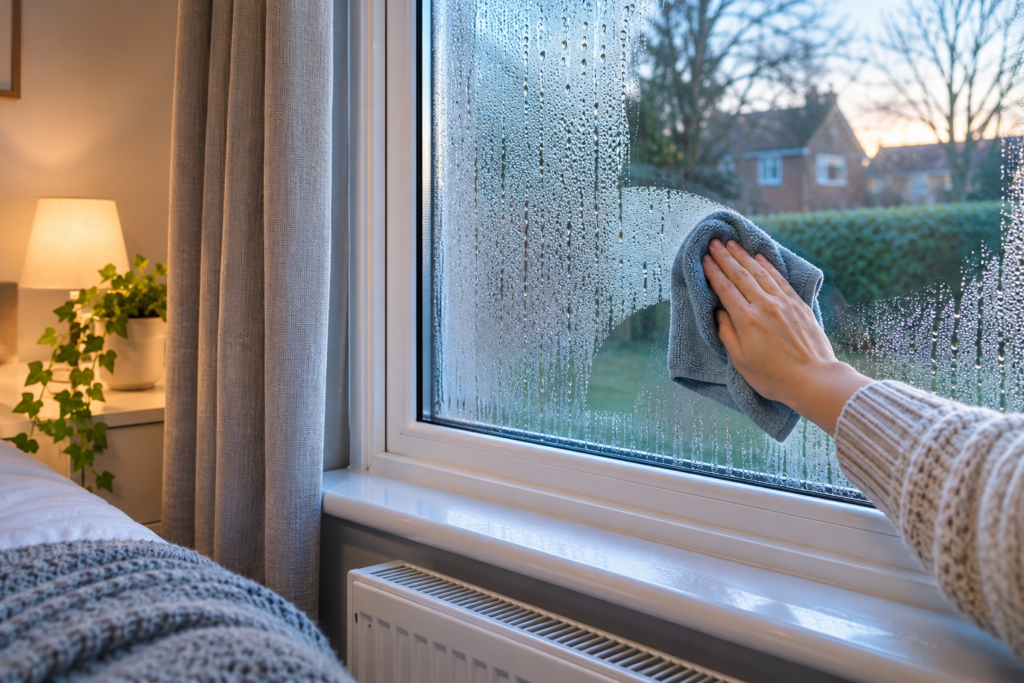

Waking up to wet windows can be frustrating, especially during cold winter mornings. Water droplets on bedroom windows, damp window frames and musty smells can indicate excess indoor moisture. Fortunately, learning how to stop condensation on windows overnight can help you protect your home from persistent dampness and mould.
Window condensation is common in homes across the United States and United Kingdom, particularly during colder months. Although occasional condensation is normal, recurring moisture can damage window sills, paintwork and surrounding materials.
This guide explains why condensation forms overnight, how to reduce it before bedtime and which long-term improvements may help keep your windows dry.
Why Does Condensation Form on Windows Overnight?
Condensation occurs when warm, moisture-filled indoor air touches a cooler surface, such as a windowpane.
During the night, outdoor temperatures often fall, cooling the glass. Meanwhile, breathing, cooking, showering and drying laundry contribute moisture to indoor air.
When humid air touches sufficiently cold glass, water vapour turns into visible droplets.
According to the US Environmental Protection Agency, managing indoor moisture is essential for preventing mould growth.
Several conditions make overnight condensation more likely:
-
High indoor humidity
-
Poor bedroom ventilation
-
Cold or poorly insulated windows
-
Moisture from cooking and showering
-
Indoor laundry drying
-
Inadequate heating or uneven room temperatures
Understanding these causes is the first step towards preventing condensation.
12 Ways to Stop Condensation on Windows Overnight
1. Improve Bedroom Ventilation Before Sleeping
One effective way to stop condensation on windows overnight is to remove excess moisture from your bedroom before going to bed.
Open a window briefly when outdoor conditions are suitable, or use an appropriate mechanical ventilation system.
Homes with trickle vents should keep them clear and operate them according to the ventilation design.
UK government home ventilation guidance explains that ventilation helps remove trapped moisture and indoor pollutants.
Avoid blocking air vents with curtains, furniture or decorations.
2. Keep Indoor Humidity Under Control
Excess humidity increases the likelihood of condensation forming on cold glass.
The US EPA recommends keeping indoor relative humidity below 60%, ideally between 30% and 50%.
A digital hygrometer can help you monitor moisture levels throughout the day.
If your bedroom regularly exceeds the recommended range, investigate moisture sources and improve ventilation.
In very cold weather, lower humidity may be necessary to prevent condensation, depending on your windows and insulation.
3. Use a Dehumidifier When Necessary
A dehumidifier removes moisture from indoor air and may help reduce recurring window condensation.
This can be useful in bedrooms with limited ventilation or homes experiencing persistent high humidity.
Choose an appropriately sized model, follow the manufacturer’s instructions and empty or drain the water tank as required.
Avoid operating a dehumidifier excessively when humidity is already within a comfortable range.
Remember that a dehumidifier cannot repair leaks, damaged insulation or defective window seals.
4. Avoid Drying Clothes in Your Bedroom
Wet laundry releases moisture into indoor air as it dries.
When windows remain closed overnight, that additional moisture may settle on cooler surfaces.
Whenever possible, dry laundry outdoors or use a properly vented tumble dryer.
If indoor drying is unavoidable, use a suitable ventilated space and prevent moisture from spreading into bedrooms.
The Oxford City Council condensation guidance also recommends avoiding drying laundry directly on radiators.
5. Maintain Comfortable Room Temperatures
Cold rooms are more vulnerable to condensation because their windows and walls can reach lower surface temperatures.
Appropriate heating helps maintain warmer indoor surfaces and may reduce condensation risk.
However, heating alone does not remove moisture. It works best alongside effective ventilation.
Avoid relying on excessive heating or leaving windows fully open for long periods during freezing weather.
Check that your heating system functions correctly and that furniture does not obstruct heat distribution.
6. Wipe Away Existing Window Moisture
If water has already collected on your windows, remove it promptly.
Use a clean microfiber cloth, absorbent towel or window vacuum.
Pay special attention to the bottom corners of frames and window sills, where water may collect.
Dry the cloth outside the affected room rather than leaving wet materials nearby.
Wiping condensation does not solve the underlying humidity problem, but it reduces the time surfaces remain wet.
7. Use Kitchen and Bathroom Extractor Fans
Cooking and hot showers release substantial moisture into your home.
When that moisture spreads into bedrooms, it can contribute to overnight condensation.
Use properly functioning extractor fans while cooking or showering and continue ventilation afterwards where recommended.
Keep bathroom and kitchen doors closed during moisture-producing activities to limit the spread of humid air.
Make sure fans are clean, functioning and venting appropriately.
8. Check Double-Glazed Window Seals
Double glazing can reduce condensation by keeping the interior glass surface warmer than single glazing.
However, damaged seals, poorly fitted frames or other defects can reduce performance.
If moisture appears between the two panes of a sealed double-glazed unit, the glazing unit may have failed.
Surface condensation on the room-facing side is different and does not automatically mean the window is defective.
Contact a qualified window specialist if you suspect glazing failure or persistent water ingress.
9. Keep Curtains and Blinds From Trapping Moisture
Heavy curtains and tightly closed blinds can reduce air circulation near window glass.
As glass cools overnight, trapped humid air may produce condensation.
Where practical, leave enough space for air to circulate between window coverings and the glass.
Ensure curtains do not block radiators or ventilation openings.
Window-covering adjustments may help, but they should supplement humidity control rather than replace it.
10. Improve Window Insulation
Poorly insulated windows often have colder interior surfaces, increasing the chance of condensation.
Possible improvements include suitable secondary glazing, professionally installed double glazing or properly designed storm windows.
The EPA moisture-control advice notes that storm windows and appropriate sealing can help keep interior glass warmer.
Before sealing gaps, check that you will not block required ventilation.
A professional can advise whether your windows need repair, insulation improvements or replacement.
11. Reduce Moisture-Producing Activities Before Bedtime
If your windows regularly become wet overnight, review what happens during the evening.
Long showers, cooking without extraction and drying washing indoors can increase humidity just before bedtime.
Try moving laundry drying to a better-ventilated location, covering cooking pans and ventilating bathrooms thoroughly.
These small changes may lower the amount of moisture present when nighttime temperatures fall.
Monitoring humidity before bedtime and after waking can reveal whether your routine is helping.
12. Investigate Persistent Dampness or Mould
Occasional condensation is usually manageable, but daily pooling water, peeling paint or recurring mould deserves closer attention.
The problem may involve inadequate ventilation, cold surfaces, leaks or building defects.
Do not assume that every damp patch comes from condensation.
Inspect accessible window seals and look for signs of water entering around frames.
If the issue persists, ask a qualified professional to investigate. Renters should report recurring dampness or mould to their landlord or property manager.
UK government guidance on damp and mould stresses the importance of addressing underlying causes rather than simply removing visible mould.
A Simple Nightly Routine to Prevent Window Condensation
A consistent evening routine can make moisture control easier.
| When | What to Do |
|---|---|
| After cooking | Use kitchen extraction and close the kitchen door |
| After showering | Ventilate the bathroom and remove standing water |
| Before bedtime | Check bedroom humidity with a hygrometer |
| Before sleeping | Ensure ventilation openings are unobstructed |
| In the morning | Dry any condensation and inspect window frames |
The objective is not to eliminate all indoor moisture. It is to maintain healthy humidity and prevent water from repeatedly accumulating.
Why Is Condensation Worse in Winter?
Condensation often becomes more noticeable during winter because outdoor temperatures are lower.
Cold weather causes window glass to lose heat, while residents tend to keep windows closed for warmth.
In UK homes with older glazing or limited ventilation, overnight condensation can become particularly noticeable.
US homes in colder regions may experience similar problems, especially when indoor humidifiers operate at high settings.
The most effective solution depends on indoor humidity, window temperature and the home’s ventilation system.
When Should You Contact a Professional?
Consider professional assistance when condensation repeatedly damages walls, frames or surrounding materials.
Other warning signs include persistent mould, unexplained damp patches, visible leaks and moisture trapped between glazing panes.
A heating, ventilation or window specialist may be able to identify the underlying problem.
If mould is extensive, keeps returning or affects someone with respiratory vulnerabilities, seek appropriate professional guidance.
Simply cleaning visible mould without correcting the source of moisture may allow the problem to return.
Frequently Asked Questions
What is the fastest way to stop condensation on windows overnight?
Reduce excessive humidity, use suitable ventilation and ensure windows are not unusually cold. A dehumidifier may help in persistently humid rooms, but underlying leaks or ventilation problems also need attention.
Should I leave my windows open overnight?
Not necessarily. Brief ventilation, trickle vents or an appropriate mechanical system may be sufficient. Consider weather, security, outdoor air quality and personal comfort.
Does keeping the heating on prevent window condensation?
Heating can help warm cold surfaces, but it does not remove excess moisture. Combining appropriate heating with ventilation and humidity control is generally more effective.
Can condensation on windows cause mould?
Yes. Repeated moisture accumulation can create conditions that support mould growth, particularly around window frames, sills and nearby walls.
Why do my bedroom windows get wet every morning?
Your bedroom may have high humidity, inadequate ventilation or cold window surfaces. Overnight breathing and falling outdoor temperatures can contribute to the problem.
Final Thoughts
Learning how to stop condensation on windows overnight starts with understanding the balance between humidity, ventilation and temperature.
Small changes such as using extractor fans, monitoring humidity, drying wet surfaces and improving airflow can help reduce everyday moisture problems.
If condensation continues despite these steps, investigate insulation, glazing defects and possible building-related moisture sources.
A dry, well-ventilated home is not just more comfortable—it also helps protect windows, furnishings and indoor living conditions.